
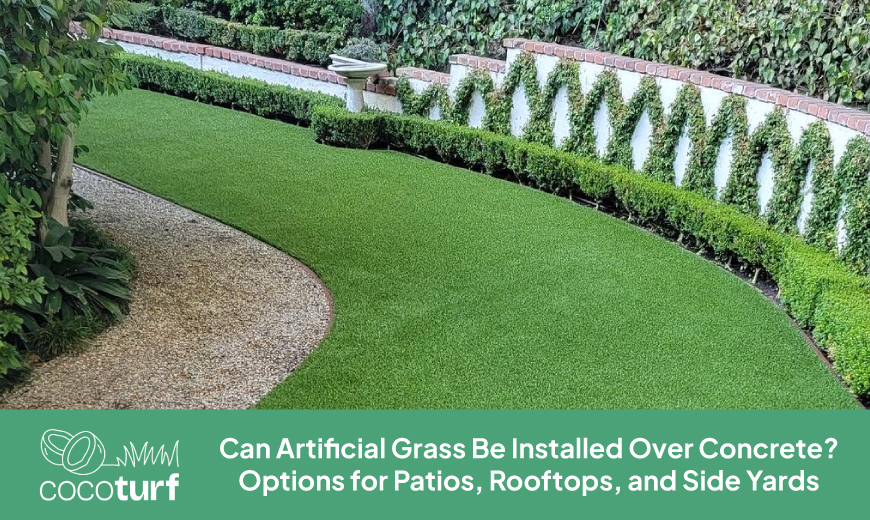
Yes, artificial grass can often be installed over existing concrete when the surface is stable, appropriately sloped, and able to move water away from the area. Rather than demolishing a structurally sound patio or walkway, the existing hardscape can sometimes become the base for a softer, greener outdoor surface.
Installing artificial grass over concrete requires a different system than installing turf over soil. There is no excavated aggregate base underneath, so drainage, cushioning, edges, seams, and attachment methods all need to work with the existing slab.
For homeowners considering installing turf on a concrete patio, the condition of the concrete should be evaluated before choosing materials. A beautiful finished surface still depends on what is happening underneath it.
When Concrete Works as a Base for Artificial Grass
Concrete can provide a firm, stable foundation when it is structurally sound and already has appropriate drainage.
An existing slab may be a good candidate when:
- The surface is reasonably even
- Cracks are minor and stable
- Water does not regularly pool
- The slab slopes toward an appropriate drainage point
- Edges can be finished securely
- Adding turf will not interfere with doors or transitions
The intended use matters as well. A decorative patio has different requirements from a children’s play area or a frequently used dog run.
Concrete patio turf in Los Angeles can be especially useful for turning hard, underused spaces into outdoor lounges, recreation areas, or softer extensions of the surrounding landscape.
Checking Slope, Cracks, and Existing Drainage First
Drainage should be evaluated before turf covers the slab.
Concrete that already collects water will not suddenly drain correctly because artificial grass is installed on top. Water needs a clear path through the turf system and toward the existing drains or lower edges of the surface.
Proper drainage for turf over concrete may require a permeable underlayment or drainage layer that allows water to travel beneath the grass rather than becoming trapped between the backing and slab.
Cracks also need attention. Small stable cracks may not prevent installation, but significant movement, uneven sections, or structural deterioration should be addressed first.
Artificial grass over concrete performs best when existing problems are corrected instead of hidden underneath the finished lawn.
Foam Underlayment Pads for Cushion and Water Flow
Concrete is hard, so simply covering it with turf may not create the softness homeowners expect from a lawn.
A turf underlayment pad can add cushioning between the concrete and artificial grass. Depending on the product and application, the underlayment may also provide channels or open space that help water move underneath the turf.
Cushioning can be particularly useful in:
- Children’s play spaces
- Family patios
- Exercise areas
- Pet zones
- Rooftop recreation areas
- Places where people frequently sit or walk barefoot
The correct pad depends on how the area will be used. Playground applications may require specific impact-rated systems rather than a general-purpose cushioning layer.
Adhesives, Edging, and Securing Turf Without a Soil Base
Traditional turf installed over a prepared aggregate base can be secured around the perimeter with methods that are not available on a concrete slab.
Installing turf on a concrete patio may involve carefully selected adhesives, mechanical edge systems, perimeter attachment, or a combination of methods appropriate for the site.
Not every project needs to be permanently bonded across the entire surface. Rooftops and other waterproofed areas may require a floating system specifically designed to avoid unnecessary penetrations or adhesives.
Seams and edges deserve particular attention. Poorly finished edges can curl or create visible transitions, while badly planned seams can make an otherwise premium installation look artificial.
Patio, Rooftop, and Side Yard Applications
Existing hardscape can provide opportunities to introduce greenery in places where maintaining natural grass would be difficult or impractical.
Artificial grass on pavers can create an entirely different effect from covering a solid slab. Narrow turf strips between pavers can soften the hardscape while retaining a structured, architectural appearance.
Side yard artificial grass can also transform narrow areas that receive too much foot traffic or too little sunlight for a healthy natural lawn. When concrete already occupies the area, keeping the slab may reduce demolition while providing a stable foundation.
Rooftops require additional consideration because weight, waterproofing, drainage, wind exposure, and building requirements all affect the installation.
Artificial grass over concrete is therefore not one standardized application. The correct construction depends on whether the space is a patio, walkway, roof deck, courtyard, play area, or narrow side yard.
Pet Areas Over Concrete and Odor Control
Concrete-based pet areas require particularly good drainage.
Dog urine needs to move through the turf rather than remain trapped between the backing and slab. A permeable turf system combined with an appropriate drainage layer can help liquids reach the drainage route underneath.
The area should also be accessible for routine rinsing and cleaning. Organic debris and pet waste should be removed promptly, while pet-safe cleaning products can be used as recommended for the turf system.
Infill selection matters as well. Organic materials such as coconut husks and cork can provide an alternative to conventional crumb rubber while contributing to a softer, more natural-feeling surface.
Good odor control begins with the installation. Cleaning can only do so much if liquids have nowhere to go.
When Removing the Concrete Is the Better Option
Keeping an existing slab is not always the best approach.
Concrete removal may make more sense when the surface has major cracks, severe unevenness, poor drainage, significant deterioration, or an unsuitable slope. Removal may also be appropriate when the finished turf needs to match the elevation of surrounding landscaping and the existing concrete would make the surface too high.
The intended use can influence the decision as well. A larger yard designed for extensive landscaping may benefit from rebuilding the base rather than adapting an old slab.
Before installing turf on a concrete patio, it is worth comparing the cost and long-term performance of using the existing surface with the benefits of removing it and constructing a new base.
Frequently Asked Questions
Can artificial grass go directly over concrete?
Yes, in many situations, but the concrete should first be evaluated for stability, slope, drainage, cracks, and elevation. An underlayment may be recommended for cushioning or drainage.
Does artificial turf over concrete need a drainage layer?
It often benefits from one. The specific system depends on how water currently leaves the area and whether the turf backing alone can provide sufficient drainage for the application.
Is turf over concrete comfortable enough for children?
A cushioning or impact-rated pad can make the surface more forgiving. Areas beneath playground equipment may require specialized shock-absorbing systems designed for applicable fall heights.
Can I put artificial grass over concrete in a dog run?
Yes, but drainage and cleaning need careful planning. Urine should be able to pass through the turf and move away rather than collect between the grass and concrete.
Can artificial turf be installed between concrete pavers?
Yes. Turf strips between pavers can add greenery while maintaining a contemporary hardscape design. Proper preparation and secure edges help keep the narrow sections neat and stable.
Summary
Existing concrete does not necessarily need to be demolished before adding artificial turf. A structurally sound slab with suitable slope and drainage can provide a stable base for patios, courtyards, rooftops, side yards, pet areas, and other compact spaces. A turf underlayment pad can add cushioning and support water movement, while carefully planned edges and attachment methods keep the finished surface secure. When drainage, structural condition, or elevation creates problems, removing the slab and rebuilding the base may provide the better long-term solution. The key is designing the entire system around the existing surface rather than simply covering the concrete with grass.
Give Your Concrete a Greener Point of View
That plain patio, rooftop, or side yard may already have the foundation for something better. Transform hard, underused concrete into a softer, cooler, natural-looking outdoor space with premium turf, organic materials, and an installation designed around proper drainage and everyday use. With a surface that’s up to 40 degrees cooler than traditional synthetic turf products, count on long-term performance with Cocoturf that’s comprised of non-toxic, organic materials. For a free consultation, contact us at (310) 957-1900.