CocoTurf

If your artificial grass has been affected by debris, ashes, or fire retardant, our specialized cleanup service is here to help - take advantage of 20% off and reclaim your outdoor space today - contact us now!

CocoTurf Supports LA Fire Recovery Efforts Through Community Outreach & Rebuilding Initiatives If your artificial grass has been affected by debris, ashes, or fire retardant, our specialized cleanup service is here to help – take advantage of 20% off and reclaim your outdoor space today – contact us now!

Author name: CocoTurf

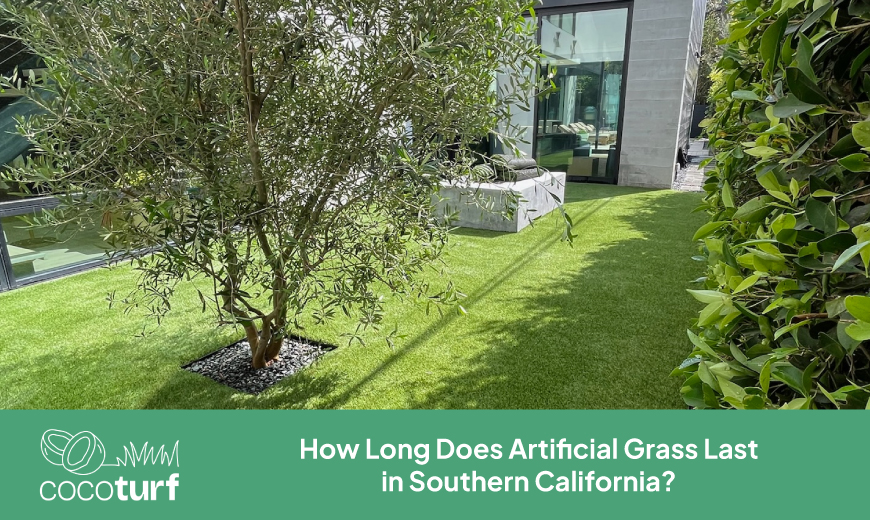
Artificial grass lawn around an olive tree beside a modern Southern California home
Blog

How Long Does Artificial Grass Last in Southern California?

Quality artificial grass can often provide many years of use, but there is no single expiration date for every lawn. Product quality, UV exposure, installation, drainage, foot traffic, pets, maintenance, and the materials used throughout the system all influence how quickly turf ages. The artificial turf lifespan is especially important in Southern California, where lawns may receive intense sunlight for much of the year. Premium fibers designed for prolonged outdoor exposure, a properly prepared base, effective drainage, and routine care can all contribute to better long-term performance. UV resistant artificial grass is designed to withstand extended sun exposure and reduce premature fading and degradation. That does not make turf immune to aging, but it is an important feature for landscapes exposed to Southern California’s strong sunshine. Typical Lifespan Ranges for Residential Artificial Grass Many premium residential artificial turf products are designed to provide roughly 15 to 20 years of service under appropriate conditions, although actual longevity varies significantly by product and property. A lightly used decorative lawn may age differently from a backyard where children play every day. A narrow dog run can experience concentrated traffic that a larger lawn distributes across hundreds of square feet. Premium turf durability therefore depends on the complete installation and how the space is used, not simply the number of years since the grass was installed. Homeowners comparing products should ask about fiber construction, backing, infill, drainage, UV protection, expected use, and warranty coverage rather than relying on a lifespan number alone. How Southern California Sun and UV Exposure Affect Turf Fibers Southern California sunshine is one of the biggest environmental factors affecting an artificial lawn. Prolonged ultraviolet exposure can contribute to fading, weakening, and deterioration in lower-quality synthetic materials. Turf intended for sunny climates should incorporate UV stabilization designed to help fibers maintain their color and structural integrity. UV resistant artificial grass is particularly valuable in open yards, pool areas, rooftops, and south- or west-facing spaces that receive hours of direct sunlight. Heat exposure should also be considered separately from UV resistance. Turf color, fiber construction, infill, shade, airflow, and surrounding hardscape can influence surface temperature even when the fibers themselves are designed to withstand sunlight. Why Base Preparation Determines Long-Term Performance Some of the most important parts of a turf installation disappear from view once the project is finished. A properly prepared base provides a stable, well-draining foundation beneath the lawn. Poor compaction, inadequate grading, insufficient drainage, or inappropriate base materials can lead to depressions, uneven areas, standing water, shifting, and premature problems. The artificial turf lifespan can be shortened when the foundation underneath it fails, even if the turf itself is a high-quality product. Installation should account for soil conditions, expected traffic, drainage, edges, seams, and the intended use of the property. Pet areas, playgrounds, rooftops, and residential lawns may each require a different approach underneath the visible grass. Foot Traffic, Pets, and High-Use Zones Artificial grass does not wear evenly when a yard is not used evenly. Paths between doors and patios, areas around outdoor kitchens, children’s play zones, and spaces near gates can receive substantially more traffic than the rest of the lawn. Fibers in these locations may flatten or show wear sooner. Pets create another type of concentrated use. Dogs often follow the same routes, play in favorite areas, and repeatedly use particular locations for bathroom breaks. Premium turf durability becomes especially important in these high-use spaces. Choosing the appropriate turf density, fibers, backing, infill, and drainage system for the property’s actual use can help the lawn maintain a more consistent appearance. Maintenance Habits That Extend Turf Life Artificial grass eliminates mowing, fertilizing, and many of the routine demands of a natural lawn, but occasional care still matters. Turf maintenance in Los Angeles can involve: Removing leaves and organic debris Brushing fibers in heavily traveled areas Rinsing dust and residue when needed Cleaning pet areas regularly Addressing spills promptly Checking seams and perimeter edges Keeping drainage routes clear Redistributing or replenishing infill when appropriate Inspecting high-use areas for changes Allowing leaves, dirt, pet debris, or other material to accumulate can affect both appearance and drainage. Regular light maintenance is generally easier than waiting until the lawn needs extensive corrective work. What an Artificial Grass Warranty Actually Covers A long warranty can sound impressive, but the number of years is only part of the story. An artificial grass warranty may cover specific manufacturing defects, excessive fading, fiber degradation, or other defined product issues. Coverage varies by manufacturer, and installation workmanship may be covered separately from the turf product itself. Before choosing a system, ask: How long does coverage last? Is the warranty prorated? What types of fading or degradation qualify? Are labor and installation covered? Are pets or heavy traffic excluded? Are there required maintenance practices? What conditions can void coverage? A warranty should be read for what it actually protects rather than treated as a guarantee that the lawn will look brand-new for the entire coverage period. Signs It Is Time to Repair or Replace Your Turf Not every worn area requires a completely new lawn. Small seam problems, isolated damage, displaced infill, or limited high-traffic wear may sometimes be repairable. A professional evaluation can determine whether targeted work can restore the area. Knowing when to replace artificial turf becomes more important when problems are widespread. Signs can include: Extensive fiber deterioration Significant fading Multiple failing seams Persistent drainage problems Widespread matting that does not respond to brushing Damaged or unstable backing Repeated lifting around edges Large uneven or sunken areas If the underlying base is the real problem, simply laying new grass over it will not provide a lasting solution. The foundation should be corrected as part of replacement. Getting More Years from UV Resistant Artificial Grass Long-lasting turf begins before installation day. Choosing a product suited to Southern California conditions and matching the complete system to the property can reduce avoidable wear. The lawn’s purpose should guide those decisions. A quiet front yard, active family
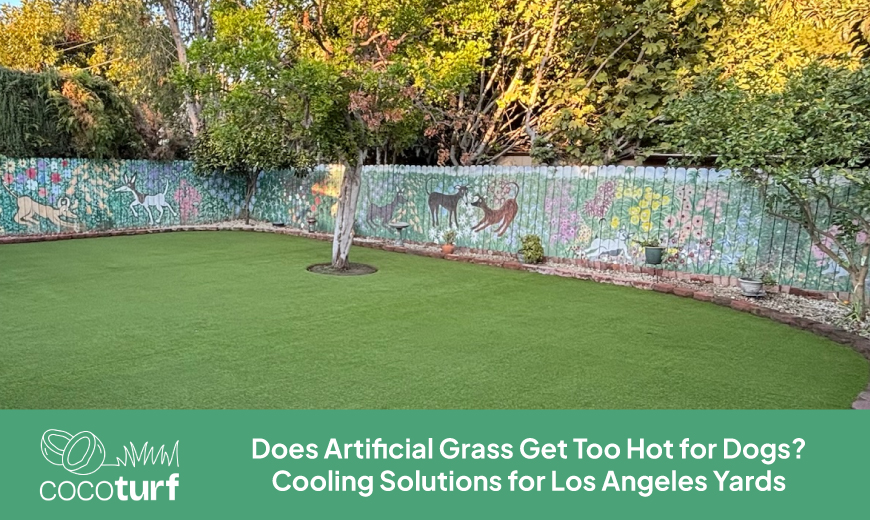
Backyard artificial grass for dogs beside a shade tree and a fence painted with an animal mural
Blog

Does Artificial Grass Get Too Hot for Dogs? Cooling Solutions for Los Angeles Yards

If you own a pet, you may be wondering, does artificial grass get too hot for dogs? It can. Like concrete, asphalt, decking, and other outdoor surfaces, synthetic turf exposed to intense direct sunlight can become much warmer than the surrounding air. For dogs, that matters because their paws come into direct contact with the surface. The good news is that turf temperature is not determined by the grass fibers alone. Infill, moisture, shade, fiber construction, airflow, and the surrounding landscape all influence how a dog area feels during a hot Los Angeles afternoon. Homeowners looking for cool artificial grass for dogs should pay particular attention to the entire turf system. Organic infill made from materials such as coconut husks and cork can retain moisture and support evaporative cooling, providing an alternative to conventional infill products that may retain more heat. How Hot Artificial Grass Can Get during Los Angeles Summers Synthetic turf temperatures can rise significantly above air temperature when exposed to strong direct sun. The exact temperature varies with the turf product, infill, time of day, surrounding surfaces, airflow, moisture, and weather conditions. A dog run surrounded by concrete walls and hardscape may experience more reflected heat than a shaded lawn bordered by plants. Dark surfaces nearby can also contribute to the overall heat load. Pet-friendly artificial grass in Los Angeles should therefore be selected for the specific yard rather than treated as a one-product-fits-all solution. Sun exposure at 2 p.m. can be more informative than how comfortable the same spot feels early in the morning. Signs Your Dog Is Uncomfortable on a Hot Surface Dogs cannot tell you that the ground is becoming uncomfortable, but their behavior can. Watch for signs such as: Quickly lifting or alternating paws Refusing to walk onto the turf Moving rapidly toward shade Licking or chewing at the paws Limping after being outside Seeking cooler concrete, soil, or another surface Unusual hesitation in a normally familiar play area Dog paw burns on turf are a reason to take surface temperature seriously rather than judging conditions only by air temperature. If you are uncertain about a surface, check it before allowing prolonged play. Dogs should always have access to water and a cooler or shaded place to move away from direct sun. Cooling Infill Options Built for Pet Turf Infill sits between the turf fibers and plays several roles in the performance of an artificial lawn. Depending on the system, it can support the blades, add stability, assist with drainage, and influence how the surface manages heat. Coconut husk infill for pet turf offers a natural approach to temperature management. Coconut-based materials can retain moisture, which can then support evaporative cooling as that moisture is released. Cork can also be incorporated into an organic infill system. Together, coconut husks and cork provide an alternative to conventional rubber-based infill while creating a more natural-feeling surface. Pet turf cooling infill works best as part of a complete design. Drainage, airflow, shade, irrigation or rinsing practices, and turf construction should all complement the infill rather than expecting one material to solve every heat issue. How Turf Color and Fiber Design Affect Heat Retention Not all artificial grass is constructed the same way. Fiber shape, density, pile height, color, backing, and infill can influence how a turf system responds to sunlight. Extremely dense turf may behave differently from a more open construction that allows greater airflow through the blades. Color matters visually and thermally as well. A realistic lawn usually combines several shades rather than relying on one dark, uniform green. Homeowners comparing cool artificial grass for dogs should look beyond softness in the showroom. Ask how the complete product is intended to perform in direct sunlight and which infill and installation system is recommended for pet areas. Shade, Misting, and Rinsing Strategies for Dog Areas Landscape design can do a great deal of the cooling work. Providing shade for a dog run can reduce direct solar exposure during the hottest portions of the day. Depending on the property, shade may come from trees, covered patios, pergolas, sails, umbrellas, or other structures. Lightly rinsing turf can also provide temporary cooling, particularly when paired with moisture-retaining organic infill. A misting system may be another option for frequently used pet areas. Consider where your dog naturally likes to spend time. Placing beds, water bowls, and rest areas in shaded locations gives pets alternatives when sunny portions of the yard become warm. Cool artificial grass for dogs works best when material selection and landscape planning support each other. Inland Valley Heat Versus Coastal Neighborhood Conditions Los Angeles does not have one uniform summer climate. Coastal neighborhoods can experience very different afternoon conditions from inland communities where temperatures climb substantially higher. A yard’s orientation, surrounding buildings, elevation, vegetation, and hardscape create additional microclimates even within the same neighborhood. That makes site-specific planning important when someone asks, does artificial grass get too hot for dogs? A turf system that performs comfortably in a partly shaded coastal yard may face very different heat exposure in an inland yard surrounded by masonry and full afternoon sun. For hotter locations, organic cooling infill, strategically planned shade, access to water, and occasional rinsing can work together to make the pet area more comfortable. Designing Pet-Friendly Artificial Grass in Los Angeles A good dog-friendly yard should address more than temperature. Dogs run, dig, urinate, play, and repeatedly use the same routes, which can put considerable demands on a landscape. Drainage is particularly important. The turf system should allow liquids to move through efficiently, while appropriate maintenance helps control odors and keeps heavily used areas clean. Material selection also matters when dogs spend significant time directly on the surface. An organic system using coconut husks and cork can avoid the need for traditional crumb rubber infill while contributing to heat management. For homeowners wondering does artificial grass get too hot for dogs, the better question may be how the entire yard can be designed to manage heat.

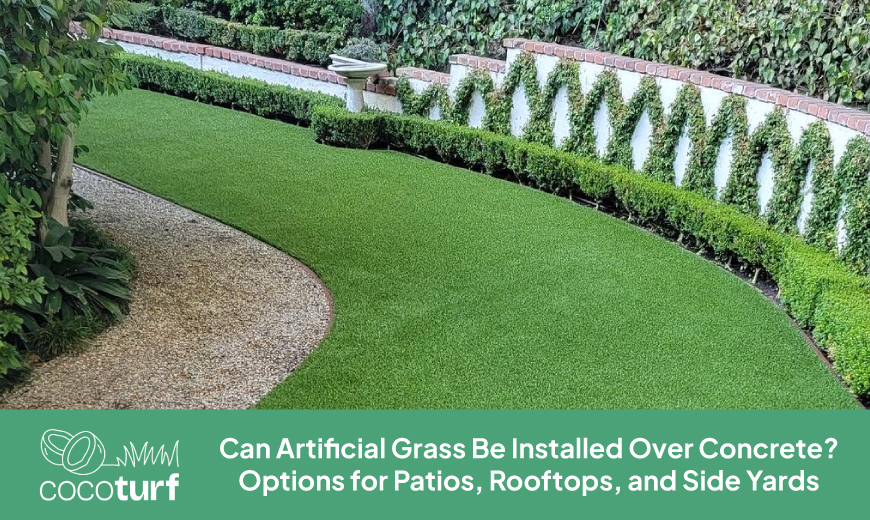
Curved artificial grass lawn bordered by a gravel path and trimmed hedges
Blog

Can Artificial Grass Be Installed Over Concrete? Options for Patios, Rooftops, and Side Yards

Yes, artificial grass can often be installed over existing concrete when the surface is stable, appropriately sloped, and able to move water away from the area. Rather than demolishing a structurally sound patio or walkway, the existing hardscape can sometimes become the base for a softer, greener outdoor surface. Installing artificial grass over concrete requires a different system than installing turf over soil. There is no excavated aggregate base underneath, so drainage, cushioning, edges, seams, and attachment methods all need to work with the existing slab. For homeowners considering installing turf on a concrete patio, the condition of the concrete should be evaluated before choosing materials. A beautiful finished surface still depends on what is happening underneath it. When Concrete Works as a Base for Artificial Grass Concrete can provide a firm, stable foundation when it is structurally sound and already has appropriate drainage. An existing slab may be a good candidate when: The surface is reasonably even Cracks are minor and stable Water does not regularly pool The slab slopes toward an appropriate drainage point Edges can be finished securely Adding turf will not interfere with doors or transitions The intended use matters as well. A decorative patio has different requirements from a children’s play area or a frequently used dog run. Concrete patio turf in Los Angeles can be especially useful for turning hard, underused spaces into outdoor lounges, recreation areas, or softer extensions of the surrounding landscape. Checking Slope, Cracks, and Existing Drainage First Drainage should be evaluated before turf covers the slab. Concrete that already collects water will not suddenly drain correctly because artificial grass is installed on top. Water needs a clear path through the turf system and toward the existing drains or lower edges of the surface. Proper drainage for turf over concrete may require a permeable underlayment or drainage layer that allows water to travel beneath the grass rather than becoming trapped between the backing and slab. Cracks also need attention. Small stable cracks may not prevent installation, but significant movement, uneven sections, or structural deterioration should be addressed first. Artificial grass over concrete performs best when existing problems are corrected instead of hidden underneath the finished lawn. Foam Underlayment Pads for Cushion and Water Flow Concrete is hard, so simply covering it with turf may not create the softness homeowners expect from a lawn. A turf underlayment pad can add cushioning between the concrete and artificial grass. Depending on the product and application, the underlayment may also provide channels or open space that help water move underneath the turf. Cushioning can be particularly useful in: Children’s play spaces Family patios Exercise areas Pet zones Rooftop recreation areas Places where people frequently sit or walk barefoot The correct pad depends on how the area will be used. Playground applications may require specific impact-rated systems rather than a general-purpose cushioning layer. Adhesives, Edging, and Securing Turf Without a Soil Base Traditional turf installed over a prepared aggregate base can be secured around the perimeter with methods that are not available on a concrete slab. Installing turf on a concrete patio may involve carefully selected adhesives, mechanical edge systems, perimeter attachment, or a combination of methods appropriate for the site. Not every project needs to be permanently bonded across the entire surface. Rooftops and other waterproofed areas may require a floating system specifically designed to avoid unnecessary penetrations or adhesives. Seams and edges deserve particular attention. Poorly finished edges can curl or create visible transitions, while badly planned seams can make an otherwise premium installation look artificial. Patio, Rooftop, and Side Yard Applications Existing hardscape can provide opportunities to introduce greenery in places where maintaining natural grass would be difficult or impractical. Artificial grass on pavers can create an entirely different effect from covering a solid slab. Narrow turf strips between pavers can soften the hardscape while retaining a structured, architectural appearance. Side yard artificial grass can also transform narrow areas that receive too much foot traffic or too little sunlight for a healthy natural lawn. When concrete already occupies the area, keeping the slab may reduce demolition while providing a stable foundation. Rooftops require additional consideration because weight, waterproofing, drainage, wind exposure, and building requirements all affect the installation. Artificial grass over concrete is therefore not one standardized application. The correct construction depends on whether the space is a patio, walkway, roof deck, courtyard, play area, or narrow side yard. Pet Areas Over Concrete and Odor Control Concrete-based pet areas require particularly good drainage. Dog urine needs to move through the turf rather than remain trapped between the backing and slab. A permeable turf system combined with an appropriate drainage layer can help liquids reach the drainage route underneath. The area should also be accessible for routine rinsing and cleaning. Organic debris and pet waste should be removed promptly, while pet-safe cleaning products can be used as recommended for the turf system. Infill selection matters as well. Organic materials such as coconut husks and cork can provide an alternative to conventional crumb rubber while contributing to a softer, more natural-feeling surface. Good odor control begins with the installation. Cleaning can only do so much if liquids have nowhere to go. When Removing the Concrete Is the Better Option Keeping an existing slab is not always the best approach. Concrete removal may make more sense when the surface has major cracks, severe unevenness, poor drainage, significant deterioration, or an unsuitable slope. Removal may also be appropriate when the finished turf needs to match the elevation of surrounding landscaping and the existing concrete would make the surface too high. The intended use can influence the decision as well. A larger yard designed for extensive landscaping may benefit from rebuilding the base rather than adapting an old slab. Before installing turf on a concrete patio, it is worth comparing the cost and long-term performance of using the existing surface with the benefits of removing it and constructing a new base. Frequently Asked Questions Can artificial grass

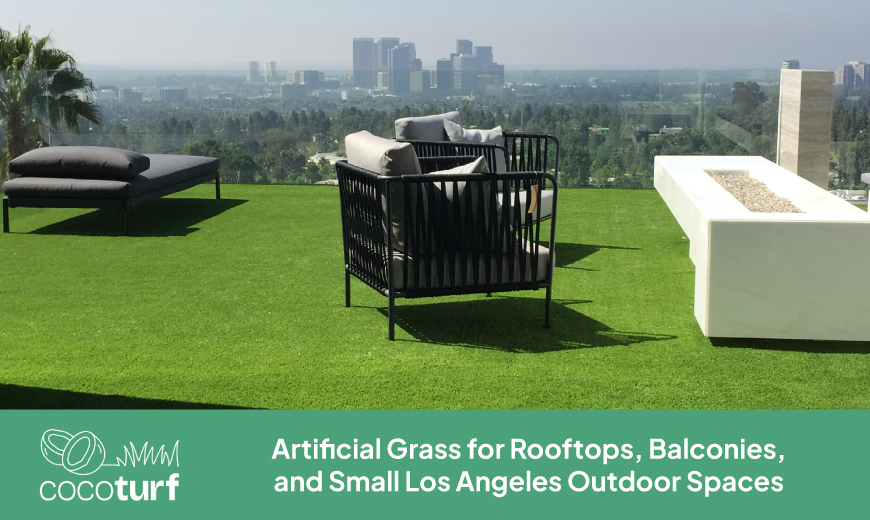
Rooftop artificial grass with lounge chairs and a fire pit overlooking the Los Angeles skyline
Blog

Artificial Grass for Rooftops, Balconies, and Small Los Angeles Outdoor Spaces

A rooftop, balcony, or compact patio can become a comfortable outdoor living space with artificial grass, but installation over an elevated surface requires a different approach than installation over soil. Weight, drainage, waterproofing, wind, sun exposure, and access all need to be considered before the turf goes down. Well-planned artificial grass for rooftops should work with the existing structure rather than interfere with it. The installation needs to preserve drainage routes, protect the roof membrane, and use materials suited to the building and how the space will be used. Balcony artificial grass requires similar planning on a smaller scale. The finished surface should feel soft, polished, and natural without trapping water, blocking drains, or adding unnecessary weight. Why Rooftops and Balconies Need a Different Turf System A ground-level turf installation can typically be excavated, graded, and prepared with a compacted base. Rooftops and balconies already have structural surfaces and waterproofing systems that need to remain intact. A lightweight artificial turf system can use specialized layers that support drainage, cushioning, and airflow while protecting the surface underneath. Depending on the property, a floating system may also eliminate the need to drill into the roof or permanently adhere turf to it. The entire assembly matters. Turf fibers may be the only part you see, but the system underneath has a major effect on drainage, stability, comfort, and long-term performance. Weight, Load Limits, and Building Approval Before Installation Rooftop planning should begin with what the structure can safely support. The total load can involve much more than turf. Furniture, planters, outdoor kitchens, shade structures, people, drainage components, and other landscape elements all contribute to the finished space. Professional rooftop turf installation in Los Angeles should take the complete design into account before materials are selected. Condominium and multifamily properties may also require HOA, property management, or building approval before installation begins. Understanding these requirements early makes it easier to design an attractive green space without unnecessarily loading or altering the existing structure. Rooftop Turf Drainage That Protects the Roof Membrane Water needs a clear path through and underneath the turf to the building’s existing drainage system. Blocking that route can allow water to collect where it should not. Effective rooftop turf drainage keeps scuppers, drains, channels, and other water-management components accessible. Permeable turf backing and an appropriate drainage layer can help water travel through the system rather than becoming trapped underneath it. The waterproof membrane also needs protection throughout installation and future maintenance. Artificial grass for rooftops should never be approached as outdoor carpeting that can simply be rolled across a roof deck. What happens beneath the visible surface is just as important as how the finished grass looks. Managing Heat and Reflected Sun on Elevated Surfaces Los Angeles rooftops and balconies can receive intense direct sunlight as well as heat reflected from glass, walls, concrete, and nearby hardscape. Material selection becomes particularly important when people, children, or pets will regularly use the space. Organic infill materials such as coconut husk and cork can retain moisture and support evaporative cooling, helping create a more comfortable surface than conventional systems that use heat-retaining infills. Shade, airflow, umbrellas, planters, and surrounding materials can also influence comfort. For balcony artificial grass exposed to strong afternoon sun, combining the turf system with smart shade and landscape design can make the area more inviting throughout the day. Securing Turf Against Wind Without Penetrating the Roof Elevated outdoor spaces can experience stronger wind than protected yards at ground level. Turf therefore needs to remain secure without compromising the waterproof roof assembly. Depending on the property and installation requirements, floating systems can provide an alternative to drilling through the surface or relying on permanent adhesives. Edges, seams, transitions, perimeter conditions, and the shape of the space all influence how the system should be secured. The goal is a stable installation that feels integrated with the architecture while keeping the underlying roof protected. Design Ideas for Small Patios, Courtyards, and Side Yards Limited square footage can actually make good landscape design more noticeable. A relatively small amount of green can soften concrete, tile, decking, and surrounding walls while giving different areas a clear purpose. Artificial grass for small yards can be used to create: A compact outdoor lounge A children’s play area A pet-friendly corner Green strips between pavers A yoga or exercise space A dining area bordered by planters A pathway through a narrow side yard A small putting or recreation area Condo patio turf can also transform an otherwise hard, plain surface into an extension of the interior living space. Clean edges, realistic texture, subtle transitions, and appropriately scaled furnishings help keep a small area sophisticated rather than crowded. Balcony Artificial Grass for Compact Outdoor Living A balcony may offer only a few dozen square feet, so every material has a noticeable visual impact. Turf can soften concrete and hard architectural lines while providing a more comfortable surface underfoot. It does not necessarily need to cover the entire balcony. A defined green section paired with lounge seating, containers, or a dining area can create visual zones without overwhelming the space. Drain locations and access points should remain functional and accessible. When future access to the underlying balcony surface may be necessary, a removable or floating configuration can offer additional flexibility. Maintenance Tips for Rooftop and Balcony Turf Artificial turf eliminates mowing and traditional lawn irrigation, but periodic care keeps an elevated installation looking clean and performing properly. Routine maintenance can involve: Removing leaves and airborne debris Brushing fibers in high-traffic areas Rinsing the surface when appropriate Cleaning spills promptly Checking seams and perimeter edges Keeping drains and drainage channels clear Monitoring areas beneath furniture and planters Maintaining infill at the recommended level Balcony artificial grass can collect dust, pollen, leaves, and other debris even several stories above ground. Because these spaces are compact, regular light maintenance is usually easier than waiting for debris to accumulate around drainage points. Creating More Usable Space with Artificial Grass for Rooftops In

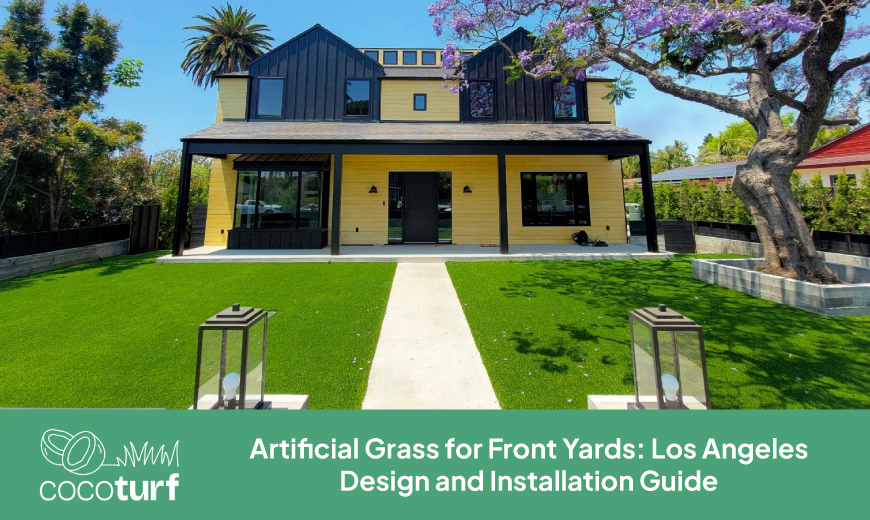
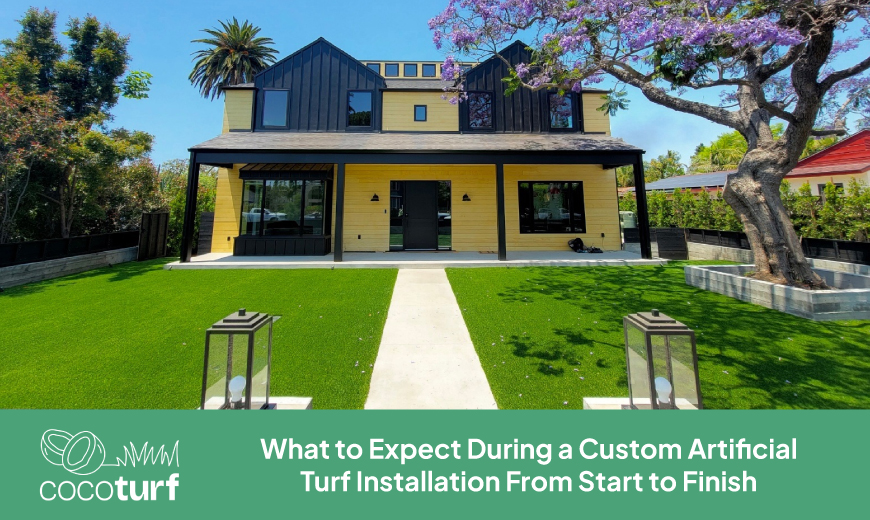
Front yard artificial grass on both sides of a concrete walkway leading to a yellow two-story home
Blog

Artificial Grass for Front Yards: Los Angeles Design and Installation Guide

A front yard has a different job than almost any other part of the property. It needs to look polished from the sidewalk, complement the architecture, and stand up to Southern California sunshine without becoming another high-maintenance landscaping project. Well-designed artificial grass for front yards can provide consistent greenery while eliminating mowing and greatly reducing the water required to maintain a conventional lawn. The most convincing results come from treating turf as one element of the landscape rather than covering every available inch in green. Professional front yard turf installation also considers what people see from the street. Blade direction, seams, edges, transitions, planting beds, walkways, and driveway borders all contribute to whether the finished landscape appears natural and appropriate for the home. Why Los Angeles Homeowners Are Replacing Front Lawns Maintaining a lush natural lawn in Southern California can require significant irrigation, routine mowing, fertilizing, edging, and ongoing attention. A front lawn replacement in Los Angeles can reduce those maintenance demands while keeping a green element in the landscape throughout the year. Turf can also eliminate common problems such as worn areas near walkways, muddy spots, and uneven sections caused by inconsistent grass growth. The goal does not have to be an entirely synthetic landscape. Combining turf with drought-conscious planting and hardscape can create a more layered, upscale appearance. Choosing Blade Color and Texture for Street-Side Curb Appeal Real grass is not one uniform shade of green. That is one reason overly bright or perfectly consistent synthetic lawns can look artificial from the street. Realistic artificial grass typically combines different shades, blade shapes, heights, and thatch tones to create greater visual depth. The best choice should also complement the home’s architecture and surrounding landscaping. Curb appeal artificial grass should look convincing from multiple viewpoints, including the sidewalk, driveway, front entrance, and street. Samples are useful, but evaluating them outdoors in natural sunlight provides a much better sense of how the finished lawn may appear. Designing around Walkways, Driveways, and Planting Beds A front yard usually contains more interruptions than an open backyard. Driveways, pathways, steps, utility boxes, trees, planting beds, mailboxes, and property boundaries all affect the turf layout. Artificial grass for front yards can be shaped around these elements to create clean transitions without making the landscape appear overly segmented. Curves can soften large expanses of turf, while crisp straight lines may better complement modern architecture. Existing trees need appropriate space around their trunks and roots, and planting beds should be designed so soil, mulch, and organic debris do not constantly spill onto the turf. Pairing Turf with Drought-Tolerant Plants and Hardscape A drought-tolerant front yard in Los Angeles does not have to mean choosing between an all-turf lawn and an entirely gravel landscape. Artificial grass can provide the green foundation while drought-tolerant plants, ornamental grasses, succulents, stone, pavers, and other hardscape add texture and dimension. This combination can also reduce the amount of turf required while giving the yard a more custom appearance. Organic infill made from coconut husks and cork can further distinguish a premium turf system from conventional installations that rely on traditional rubber-based infill. These natural materials can retain moisture and support evaporative cooling while contributing to a softer, more natural-feeling surface. Edging, Seams, and Blade Direction on Highly Visible Lawns Small installation details become especially noticeable in a front yard because the landscape is viewed from predictable angles every day. Blade direction influences how light reflects from the fibers and how full the lawn appears from the street. Installers should plan orientation before cutting the turf rather than deciding after sections are already positioned. Seams should also be placed strategically. Poor alignment can create visible lines that interrupt the lawn’s natural appearance. Front yard turf installation requires equally careful attention around driveways, sidewalks, planters, and borders. Clean edging helps prevent lifting and gives the lawn the tailored finish expected in a highly visible area. HOA Rules and California Civil Code 4735 Homeowners in HOA communities should review their association’s current landscaping standards before beginning a project. According to California Public Law, California Civil Code Section 4735 limits certain HOA restrictions related to water-efficient landscaping and, under specified circumstances, artificial turf or synthetic surface installations. However, the law does not mean every turf design is automatically exempt from reasonable association standards. Homeowners should review the current statute, governing documents, and architectural approval process applicable to their property before installation. Searches for HOA artificial turf California law often lead homeowners to statewide rules, but individual associations may still have design requirements involving appearance, installation quality, materials, or project approval. Getting those details before selecting turf can prevent unnecessary redesign later. Front Yard Installation Steps and Timeline A professional installation begins long before the grass is rolled into place. The process generally involves: Evaluating the existing lawn and drainage Planning turf orientation, seams, and transitions Removing existing grass and unsuitable material Preparing and compacting the base Establishing appropriate grading and drainage Cutting and fitting the turf Securing seams and perimeter edges Adding the specified infill Brushing and finishing the fibers Inspecting transitions and final details Site size, access, existing landscape conditions, drainage needs, and design complexity influence the project timeline. For artificial grass for front yards, careful preparation is worth the attention because uneven base work or rushed seams can remain visible from the street long after installation is complete. Creating Curb Appeal with Front Yard Turf Installation The strongest front-yard designs do not attempt to imitate a perfectly flat rectangle of conventional lawn. They use turf as part of a larger landscape composition. A narrow turf panel between planting beds can highlight a modern walkway. Curved green areas can soften a traditional home. Turf between oversized pavers can create a more architectural entrance, while strategically placed drought-tolerant plants can add height and seasonal interest. The result should complement the property rather than compete with it. Premium fibers, realistic variation, precise installation, organic materials, and balanced landscaping can give the front yard a finished appearance

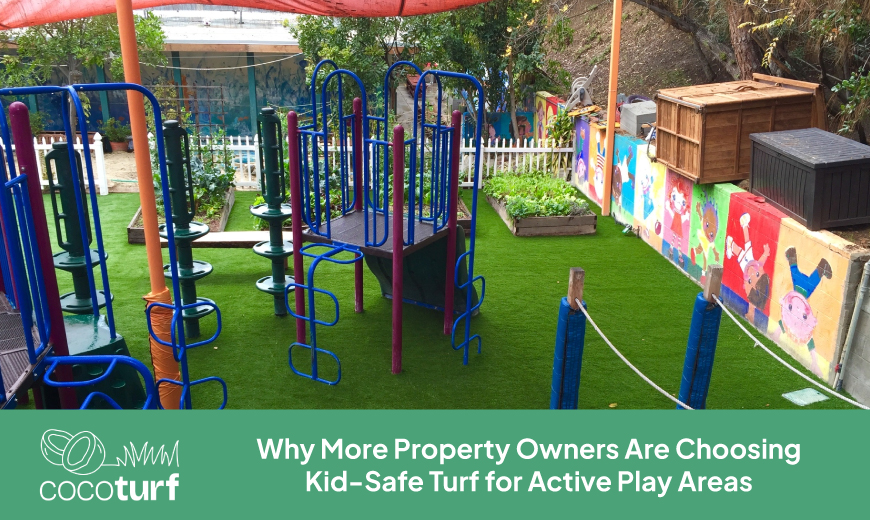
playground and sports field turf installation in Los Angeles
Blog

Why More Property Owners Are Choosing Kid-Safe Turf for Active Play Areas

Children’s play areas need surfaces that can withstand running, jumping, games, changing weather, and frequent daily use. Playground and sports field turf installation in Los Angeles requires more than selecting grass with an appealing color and soft texture. The base, drainage, infill, seams, edge details, and maintenance plan all influence how the completed area performs. Property owners increasingly choose an artificial grass playground because it provides a consistent surface without mud, bare patches, routine mowing, or conventional lawn treatments. Cocoturf installs premium turf systems made in the USA, incorporating coco coir ingredients and specialized methods designed to improve comfort, drainage, durability, and appearance. Kid-Safe Turf Starts With the System Built Underneath the Blades The visible grass is only one part of a playground turf system. Installation begins with site evaluation, removal of unsuitable material, precision grading, base preparation, drainage planning, compaction, and secure edge construction. The complete assembly should reflect the height and type of play equipment, anticipated traffic, age range, and property conditions. Areas beneath elevated equipment may require different performance characteristics than open spaces intended for running, informal games, or general recreation. Surface Temperature is the Safety Factor Most Play Areas Overlook Synthetic surfaces can retain heat when exposed to direct sunlight. Shade, air temperature, blade color, infill, surrounding hardscape, irrigation, and time of day can all influence surface temperature. Cocoturf uses a nature-inspired system with natural organic cooling infill and specialized installation methods. Depending on site conditions, it is designed to remain more than 40 degrees Fahrenheit cooler than many conventional synthetic turf products. Property owners should still evaluate shade and monitor surfaces during hot weather before children begin playing. Non-Toxic Materials Matter More in Spaces Where Children Play Young children frequently sit, crawl, tumble, and place their hands directly on the ground. Property owners should therefore ask for clear documentation covering the turf fibers, backing, infill, adhesives, and other materials included in the installation. Cocoturf offers products described as plastic-, lead-, and heavy-metal-free, along with fire-rated turf system options. Buyers should verify which specifications apply to the selected product rather than assuming every synthetic turf installation uses identical materials. Drainage Keeps Play Areas Usable After Rain and Heavy Daily Use A natural lawn can develop puddles, mud, uneven ground, and worn paths around swings, slides, entrances, and other heavily used areas. Properly designed playground turf can provide greater surface consistency, but its performance depends on the drainage system underneath. Precision grading and a custom drainage plan help move water away from the play area. Drainage should reflect the property’s soil, slope, surrounding pavement, irrigation, rainfall patterns, and existing outlets instead of relying on one standard base design. Durability Determines Whether a Play Surface Lasts or Wears Thin Playground surfaces experience concentrated traffic in predictable locations. Children repeatedly run across the same routes and gather around equipment, gates, benches, and activity areas. Weak seams, poor edge restraint, insufficient base preparation, or an unsuitable turf product can lead to early wear. Artificial grass for schools, residential communities, childcare properties, and public spaces should be chosen according to expected use. Turf for schools may require different density, drainage, and maintenance planning than a small residential play area. What Property Owners Should Ask Before Approving a Playground Turf Installation A proposal should explain the entire system rather than naming only the turf product. Before approving synthetic turf installation, property owners should ask: What Site Preparation Is Included? How Will the Area Be Graded and Drained? Which Turf, Backing, and Infill Materials Will Be Used? What Product Documentation Is Available? How Are Seams and Perimeters Secured? Does the Design Account for Play Equipment? What Maintenance Will the Surface Require? Which Workmanship and Product Warranties Apply? Fake grass for playground use should never be treated as a basic decorative lawn product. The installation must reflect how children will move across the area, where wear will concentrate, and how the surface will perform in heat and wet weather. Frequently Asked Questions What should Los Angeles property owners look for in playground turf? Property owners should evaluate the complete installation, including grading, base preparation, drainage, turf construction, infill, seams, perimeter attachment, temperature management, and maintenance requirements. They should also request product documentation and confirm that the proposed system is appropriate for the play equipment, age group, traffic level, and existing site conditions. Does artificial grass eliminate every playground safety concern? No. Turf can provide a consistent, low-maintenance surface, but it does not eliminate the need for supervision, equipment inspections, heat awareness, maintenance, or an appropriate system beneath elevated play structures. Safety depends on the complete environment, not the appearance or softness of the grass blades alone. How does playground turf handle rain in Los Angeles? Performance depends on the preparation beneath the turf. The installer should evaluate slope, soil, surrounding pavement, existing drains, and expected water flow before designing the base. Proper grading and drainage help reduce puddling, mud, and prolonged closures, but an inadequate installation can trap water beneath or around the play area. Is artificial grass suitable for schools and childcare properties? It can be suitable when the selected system reflects daily traffic, drainage requirements, play activities, maintenance expectations, and applicable property standards. School and childcare administrators should examine documentation for every material in the system and determine whether additional impact-performance requirements apply beneath or around specific play equipment. Can playground and sports field turf installation in Los Angeles reduce maintenance? Artificial turf removes mowing and can reduce watering, muddy areas, and repeated reseeding. However, it still requires routine cleaning, debris removal, brushing, infill monitoring, drainage checks, and inspections for lifted edges, damaged seams, or concentrated wear. The maintenance schedule should match the number of users and intensity of activity. Summary A durable artificial grass playground depends on the complete system beneath and around the visible surface. Proper material selection, temperature planning, grading, drainage, edge construction, and routine maintenance help create a more consistent active area. Playground and sports field turf installation in Los Angeles should always be designed around the

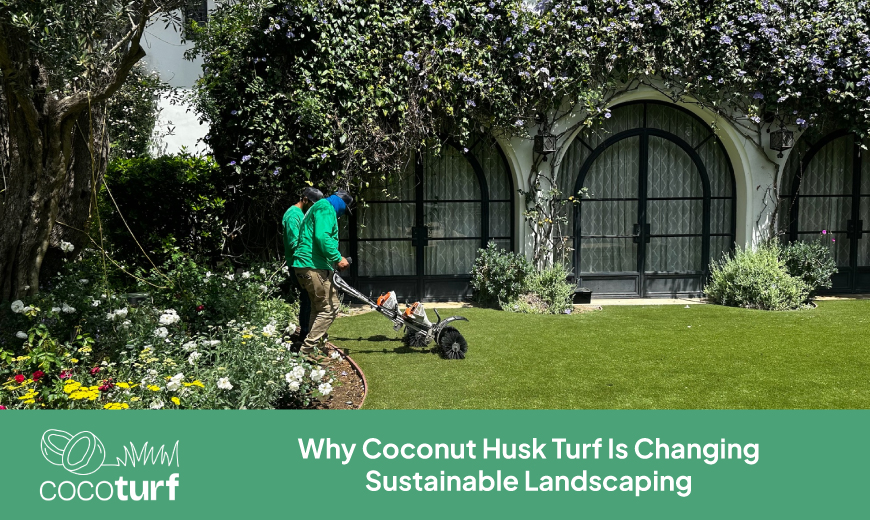
landscaping turf installation in Los Angeles
Blog

Why Coconut Husk Turf is Changing Sustainable Landscaping

Reducing irrigation is only one part of creating a lower-input outdoor environment. Landscaping turf installation in Los Angeles can also address surface heat, maintenance, drainage, material composition, and long-term usability. Coconut husk systems offer an alternative to conventional infills that depend heavily on sand or crumb rubber. A successful artificial grass landscape must perform in direct sunlight while maintaining a comfortable, natural-looking surface. Cocoturf combines premium turf made in the USA with Cocofill, a nature-inspired infill developed from coconut husk and natural cork. The complete system is designed to retain moisture and release cooling effects as temperatures rise. Coconut Husk Infill Solves the Heat Problem Sand and Crumb Rubber Created Conventional turf installations often use sand, crumb rubber, or combinations of synthetic infill materials. These products can add weight, support blades, and influence surface performance, but some also absorb and retain considerable heat under direct sunlight. Coconut husk turf infill approaches temperature management differently. Its organic composition can retain moisture and support evaporative cooling. Site exposure, air temperature, shade, surrounding hardscape, turf color, and maintenance still affect the final surface temperature, so no infill eliminates heat in every condition. Cocofill Blends Coconut Husk and Natural Cork Into One Organic Layer Cocofill combines processed coconut husk and natural cork to create an organic infill layer within the turf system. The materials help support the turf blades while contributing to a softer, more natural surface underfoot. The infill should be installed at the specified depth and distributed consistently across the landscape turf. Base preparation, drainage, turf selection, infill quantity, and grooming all influence performance. Coconut-based material alone cannot correct poor grading, inadequate drainage, or an unsuitable turf product. Moisture Retention is What Lets an Organic Infill Cool the Surface Coconut husk and cork contain cellular structures capable of holding moisture. As the surface warms, retained moisture can gradually evaporate and help reduce heat at the turf level. The effect is similar to the cooling process that occurs when moisture evaporates from natural soil and vegetation. Cooling results vary with weather and property conditions. Periodic moisture may be required to support the process during extended dry periods. Depending on the location and selected system, Cocoturf surfaces are designed to remain more than 40 degrees Fahrenheit cooler than many traditional synthetic turf products. Sustainable Landscaping Means Fewer Inputs, Not Only Less Water Water conservation is an important reason to replace a conventional lawn, but sustainability should be evaluated more broadly. A landscape may also require fertilizers, pesticides, fuel-powered mowing, edging, reseeding, and repeated replacement of damaged areas. Eco friendly artificial grass should reduce ongoing inputs while remaining durable enough to avoid premature replacement. Property owners should consider product origin, material composition, expected lifespan, maintenance requirements, drainage performance, heat management, and how the installation works with trees, planting beds, permeable areas, and existing irrigation. Non-Toxic Certification Carries as Much Weight as the Sustainability Claim Terms such as natural, green, and sustainable can be used broadly, so property owners should request documentation supporting environmental and material claims. Product data should address turf fibers, backing, infill, adhesives, fire performance, lead, heavy metals, and other components included in the system. Cocoturf offers products described as plastic-, lead-, and heavy-metal-free, along with fire-rated turf options. Specifications can vary among products, so owners should confirm that the documentation corresponds to the exact system proposed for their property. Where Coconut Husk Turf Fits Across an Artificial Grass Landscape Coconut husk systems can be incorporated into front yards, backyards, pool surroundings, pet areas, playgrounds, commercial properties, and recreational spaces. The design should identify where turf provides practical value and where planting, shade, hardscape, or permeable materials remain the better choice. High quality artificial grass should complement the complete landscape rather than cover every available surface. Proper landscaping turf installation in Los Angeles requires precision grading, custom drainage, secure edges, suitable infill, and careful transitions between turf and surrounding materials. A fake grass landscape can appear artificial when every section uses the same blade height, color, and layout. Varying planting borders, contours, pathways, and usable zones helps the turf fit the architecture and surrounding outdoor environment. Frequently Asked Questions What is coconut husk turf infill? Coconut husk infill is an organic material placed between artificial grass blades as part of the completed turf system. It can support the blades, contribute to a softer feel, and retain moisture for evaporative cooling. Specific formulations may combine coconut material with cork or other natural components. Does coconut husk infill keep artificial grass cool in Los Angeles? It can reduce surface heat compared with many conventional infill systems, but performance depends on sunlight, weather, shade, moisture, surrounding materials, and installation. No outdoor surface remains cool under every condition. Property owners should discuss expected performance and maintenance with the installer before choosing a system. Is Cocofill completely maintenance-free? No. Organic infill and artificial turf still require care. Maintenance can include removing debris, brushing fibers, monitoring infill distribution, checking drainage, cleaning used areas, and adding moisture when needed to support cooling. The recommended schedule depends on traffic, weather, pets, trees, and the specific installation. Can coconut husk turf be used throughout a Los Angeles property? It can work in many residential and commercial areas, including lawns, play spaces, pet areas, pool surroundings, and recreational zones. Each location should be evaluated for drainage, traffic, sun exposure, slope, and intended use. One turf product or base design may not be suitable for every part of a property. How should I compare sustainable artificial turf systems? Compare product composition, manufacturing location, documentation, cooling method, drainage design, expected lifespan, warranty, maintenance, and end-of-life considerations. Ask whether environmental claims apply to the turf, infill, backing, or complete system. A credible proposal should explain both the materials and the site-specific installation process. Summary Coconut husk and cork provide a nature-inspired alternative to conventional synthetic infills. A properly designed artificial grass landscape can reduce irrigation and recurring maintenance while addressing drainage, comfort, durability, and surface temperature. Landscaping turf installation in Los Angeles should combine documented

premium artificial turf installation in Los Angeles
Blog

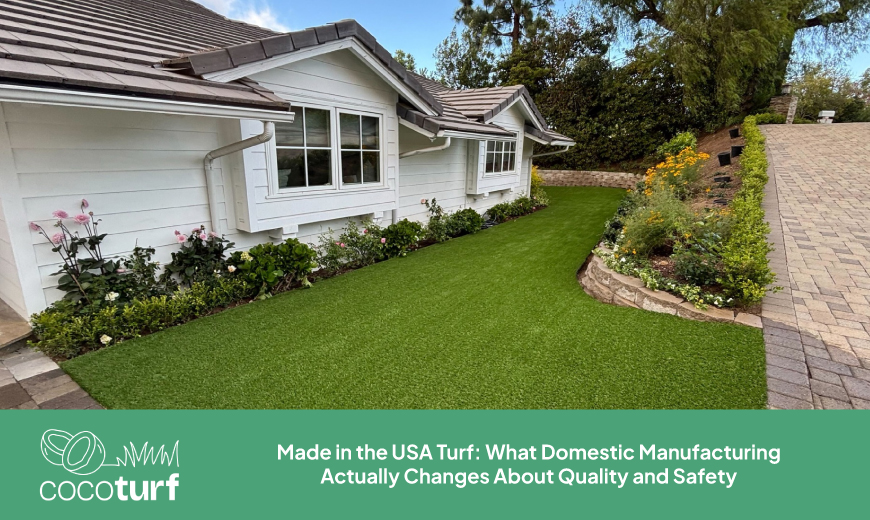
Made in the USA Turf: What Domestic Manufacturing Actually Changes About Quality and Safety

Manufacturing location does not automatically guarantee a better product, but it can make materials, testing, production standards, and supplier accountability easier to examine. Premium artificial turf installation in Los Angeles begins with selecting a documented turf system and verifying that its construction matches the intended residential, commercial, playground, pet, or recreational application. Property owners considering made in USA artificial turf should look beyond the flag displayed on a label or brochure. A credible manufacturer should be able to explain where the turf is produced, how raw materials are sourced, which safety tests have been completed, and whether the documentation applies to the exact product being specified. Domestic Manufacturing Makes the Supply Chain Traceable Domestic manufacturing can provide a clearer path between the installer, distributor, manufacturer, production facility, and quality-control team. When a product question arises, buyers may be able to identify where the turf was produced and which specifications governed that production run. Traceability is particularly important when a project requires replacement material, warranty support, or confirmation of product composition. American made artificial grass should be supported by documentation that identifies the manufacturer and production location rather than relying on general marketing language. Testing and Certification Records Are Easier to Obtain from a US Manufacturer Testing records help property owners determine whether a turf product satisfies relevant material, safety, durability, and performance requirements. Domestic manufacturers may provide more direct access to technical data sheets, laboratory reports, fire ratings, warranty terms, and product-specific certifications. Buyers should confirm that every document corresponds to the exact turf model being proposed. A report for one product line does not necessarily apply to another, even when both come from the same manufacturing facility. Lead and Heavy Metal Testing Matters Most Where Children and Pets Play Children and pets have frequent direct contact with turf surfaces. They may sit, crawl, roll, or play close to the fibers and infill. For these applications, property owners should request documentation addressing lead, heavy metals, backing materials, infill, and other system components. Terms such as non toxic artificial turf and lead free artificial grass should be supported by current product information or independent testing. Buyers should also determine whether the claim applies only to the turf blades or to the backing, infill, adhesives, and complete installation. Shorter Shipping Distances Cut Both Lead Times and Freight Emissions Domestic production can shorten the distance between a manufacturing facility and a project site, potentially reducing freight time, international shipping delays, port congestion, and transportation-related emissions. The actual benefit depends on where raw materials originate, where manufacturing occurs, and how the finished product reaches the installer. Premium artificial turf installation in Los Angeles can also benefit from more predictable product availability. Shorter replenishment times may reduce delays when a project requires additional material because of site revisions, measurement changes, or installation damage. Batch Consistency Matters When One Project Spans Multiple Deliveries Turf manufactured in separate production runs can show minor variations in color, texture, blade direction, density, or backing. These differences may become noticeable when rolls from different batches are installed next to one another. High quality artificial grass should be ordered from the same production lot whenever possible. On larger projects, the installer should calculate material requirements carefully and include an appropriate allowance for cuts, seams, transitions, and repairs. If another delivery becomes necessary, production records help determine whether matching material remains available. How to Verify a Made in USA Artificial Turf Claim Before Approving a Turf Spec A Made in the USA claim should be specific enough for a buyer to understand what occurred domestically. Some products may be assembled in the United States using imported components, while others may be manufactured domestically from a broader range of US-sourced materials. Before approving USA manufactured synthetic turf, property owners should request: The Manufacturer’s Name and Facility Location A Product-Specific Technical Data Sheet Lead and Heavy Metal Test Results Applicable Fire or Safety Documentation Written Warranty Terms Production Lot Information Details About the Turf, Backing, and Infill Clarification of Any Domestic Content Claim Cocoturf supplies premium turf systems described as 100 percent made in the USA. Buyers should still review the exact specifications for their selected product because performance features and documentation can vary among turf systems. Frequently Asked Questions Why should Los Angeles property owners consider domestically manufactured turf? Domestic manufacturing can make it easier to trace production, request technical documents, obtain replacement materials, and communicate with the manufacturer. It may also shorten shipping distances and lead times. However, buyers should evaluate the actual product specifications and installation system instead of assuming domestic origin alone guarantees performance. Does Made in the USA automatically mean the turf is non-toxic? No. Manufacturing location and material safety are separate considerations. Buyers should request current testing for lead, heavy metals, and other substances relevant to the intended use. They should also verify whether the documentation covers the turf fibers, backing, infill, adhesives, and other components used in the finished installation. How can I verify a Los Angeles turf installer is using the specified product? Ask the installer to include the manufacturer, product name, color, specifications, and warranty in the written proposal. Product labels, roll numbers, production lots, and delivery records can provide further confirmation. This information is especially important when appearance, safety documentation, or domestic manufacturing influenced the purchasing decision. Why does the production batch matter? Separate manufacturing runs may produce slight differences in color, blade texture, density, or backing. Ordering enough material from one batch helps create a consistent appearance. The installer should include allowances for seams, cuts, irregular boundaries, and future repairs when calculating how much turf the project requires. Is USA manufactured turf better for large Los Angeles projects? It can provide advantages when a large installation requires several deliveries, detailed documentation, or replacement material. Domestic production may offer shorter communication and replenishment channels. Quality still depends on product construction, manufacturing controls, installation methods, drainage, infill, maintenance, and suitability for the property’s intended use. Summary Domestic production can improve traceability, documentation access, supply

putting green installation in Los Angeles
Blog

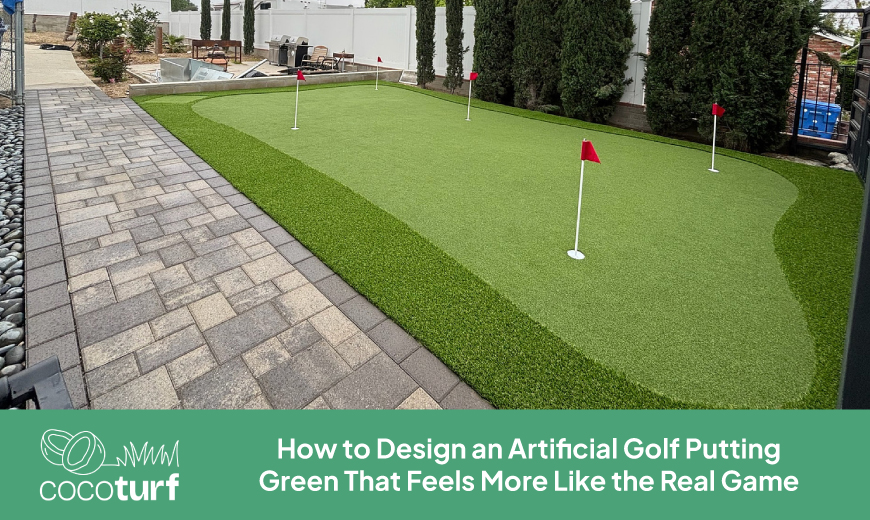
How to Design an Artificial Golf Putting Green That Feels More Like the Real Game

A realistic backyard green begins with the base, contours, drainage, and intended practice goals rather than the visible turf alone. Putting green installation in Los Angeles should consider available space, soil conditions, slope, desired green speed, player ability, and the types of shots the owner wants to practice. Well-designed outdoor artificial putting greens should provide more than a flat surface with several cups. Changes in elevation, directional breaks, fringe zones, approach areas, and varied hole locations create a setting where golfers can work on distance control, alignment, reading greens, and short-game consistency. Green Speed is Decided Long Before the Turf is Rolled Out Putting speed depends on the complete system, including base compaction, surface preparation, turf selection, blade characteristics, infill, and final grooming. Choosing turf without defining the desired playing speed can produce a green that feels unnaturally slow or difficult to control. The installer should discuss whether the owner wants a recreational surface or a faster practice green. High quality artificial grass designed for putting should provide consistent ball movement without creating an unrealistic surface that rewards only one stroke type. Contours and Breaks Separate a Real Green from a Flat Putting Mat A completely flat green allows golfers to practice basic alignment, but it offers limited preparation for actual course conditions. Subtle contours require players to judge pace, direction, and break while maintaining a controlled stroke. Contours should be created in the prepared base rather than improvised after the turf arrives. Excessive slopes can make balls difficult to stop, while thoughtful elevation changes provide several practice lines without sacrificing usable putting area. Fringe and Collar Turf Create the Transition Every Short Game Needs Fringe and collar areas create a visual and functional transition between the putting surface and the surrounding landscape turf. Different blade heights can support bump-and-run shots, light chips, and putts from just beyond the green. The transition should be planned with the overall fake grass landscape rather than added as an afterthought. Thoughtful shaping allows the green to complement nearby patios, pathways, planting beds, and recreational areas while expanding the variety of shots available. Cup Count and Placement Shape How You Actually Practice Cup placement determines the number of practice lines, distances, and breaks a golfer can experience. A compact green may need only two or three cups, while a larger design can support additional targets without becoming visually crowded. Each location should provide a distinct practice challenge. Cups placed too close to edges, steep slopes, or one another limit usable approach angles. The installer should also preserve enough uninterrupted space for longer putts across the green. Surface Temperature Decides How Long You Stay Out There Synthetic turf can retain heat under direct sunlight, especially when surrounded by concrete, stone, walls, or limited shade. A green that becomes uncomfortable during the day may receive less use, regardless of how accurately it plays. Cocoturf uses nature-inspired systems with natural organic cooling components. Coconut husk turf infill and specialized installation methods are designed to help reduce surface heat compared with many conventional synthetic products, depending on the site, weather, exposure, and selected system. Los Angeles Site Conditions Dictate How the Base is Built Soil type, drainage, slope, access, tree roots, irrigation, and existing hardscape affect the construction of every putting green. A hillside property may require more grading and stabilization, while a confined yard can limit excavation equipment and material delivery. Putting green installation in Los Angeles should begin with an evaluation of the property rather than a standard base specification. Precision grading, compaction, drainage planning, and secure perimeter construction create the foundation for consistent ball roll and long-term performance. Frequently Asked Questions How much space does a backyard putting green need in Los Angeles? A useful green can fit within a relatively compact yard, but more space allows for longer putts, additional contours, varied cup positions, and surrounding fringe. The design should respond to the property rather than forcing a standard shape into it. Access, drainage, setbacks, landscaping, and other outdoor features also affect the usable area. Can artificial putting turf reproduce the speed of a golf course? Artificial turf can be designed to provide a selected range of playing speeds, but no surface perfectly reproduces every natural green. Course conditions change with grass type, moisture, mowing, weather, and maintenance. A good installation prioritizes consistent roll and a speed appropriate for the owner’s practice goals. Are outdoor artificial putting greens suitable for sloped Los Angeles yards? Yes, but the existing slope must be evaluated carefully. Some elevation can be incorporated into realistic breaks, while excessive grade may require excavation, retaining work, drainage improvements, or stabilization. The finished contours should create playable challenges without allowing balls to roll uncontrollably away from intended cup locations. What maintenance does an artificial putting green require? Maintenance may include removing leaves and debris, brushing the surface, inspecting seams and edges, monitoring infill, clearing drainage areas, and addressing weeds around the perimeter. Heavy use can also affect specific putting lines. Following the installer’s maintenance recommendations helps preserve consistent ball roll and surface appearance. Is ecofriendly artificial grass available for Los Angeles putting greens? Material compositions and environmental claims vary considerably among manufacturers. Property owners should ask where the products are made, which materials are used, how the system manages heat and drainage, and what documentation supports environmental claims. Reduced watering is one benefit, but the entire product and installation system should be evaluated. Summary Realistic outdoor artificial putting greens combine appropriate speed, controlled contours, varied cup locations, fringe areas, temperature planning, and site-specific base preparation. The best design supports several practice situations while fitting naturally within the surrounding property. Putting green installation in Los Angeles should begin with the desired playing experience and build every layer around that goal. Best Putting Green Installation in Los Angeles Transform your outdoor space into a putting green with top-quality artificial turf installation.  This surface sports an average of up to 40 degrees cooler than traditional synthetic turf products. Count on long-term performance with Cocoturf

Custom Artificial Turf Installation
Artificial Turf, Blog

What to Expect During a Custom Artificial Turf Installation from Start to Finish

A successful artificial turf installation in Los Angeles begins well before the first roll of turf is placed. Professional installers evaluate the property, recommend materials for its intended use, prepare the ground, establish drainage, and complete each seam and edge carefully. Understanding these stages helps property owners know what to expect and why proper preparation has such a major effect on appearance and longevity. Every custom artificial turf installation should reflect the property rather than follow a standard template. A shaded side yard, sunny backyard, pet area, rooftop, indoor training space, and decorative front lawn can require different fibers, backing, infill, drainage, and construction methods. The right design balances appearance, comfort, durability, maintenance, and expected foot traffic. Artificial Turf Installation in Los Angeles From Planning to Completion The artificial grass installation process typically includes site evaluation, product selection, excavation, base preparation, drainage planning, turf placement, seaming, edge securing, infill application, brushing, and a final inspection. Project timing depends on the area’s size, access, existing landscaping, grading, and design complexity. An experienced professional turf installer in Los Angeles should explain the proposed system before work begins. The owner should understand which turf and infill will be used, how drainage will be handled, and what preparation is included. Why Every Artificial Turf Installation Starts With a Site Evaluation The first step is measuring the property and understanding how the space will be used. Installers examine drainage, grading, sun exposure, soil conditions, walkways, trees, irrigation, existing landscaping, and access for equipment. They also discuss the owner’s goals. A residential turf installation in Los Angeles intended for pets requires different planning than a formal front lawn or heavily used recreation space. Accurate evaluation allows the installer to recommend an appropriate system and prepare a realistic project plan. Preparing the Ground for a Long-Lasting Installation Preparation usually begins by removing existing grass, roots, soil, and unwanted material. The area is excavated to the required depth, graded, and cleared of debris. Irrigation components may be removed, capped, or adjusted as appropriate. A weed barrier may be installed when suitable for the application. The crew then places and compacts the selected base material in layers, creating a smooth and stable foundation. Weak preparation can contribute to uneven areas, movement, poor drainage, and premature wear. Choosing the Right Artificial Turf for Your Property Turf products differ in fiber shape, blade density, pile height, softness, color blend, backing, and durability. Shorter, resilient turf may suit pet areas or active spaces, while a softer and more varied blade structure may create the appearance desired for a landscaped lawn. Product selection should reflect how the space will function. Backyard turf installation may prioritize comfort and frequent use, while front yard turf installation may focus more heavily on appearance. Indoor turf can require different cushioning and anchoring than outdoor turf exposed to sun and rain. CocoTurf offers premium, high-end turf systems made in the USA. Its outdoor systems are designed to remain cooler under direct sun than conventional turf products and can incorporate natural coconut husk and cork materials within the infill system. Why Proper Drainage Is Critical for Turf Performance Drainage planning helps prevent standing water, odors, unstable areas, and damage to surrounding surfaces. Installers evaluate the direction water should travel and select permeable backing, base materials, and drainage components for the property. A properly graded and compacted base allows water to move away efficiently. In pet areas, drainage is especially important because it supports easier cleaning and helps reduce odor concerns. Installing the Turf With Precision and Attention to Detail After the base is completed, turf rolls are positioned so the fibers face a consistent direction. Installers cut the material around walls, planters, trees, steps, and other obstacles. Sections are aligned and joined carefully so seams remain secure and less noticeable. The perimeter is trimmed and anchored before infill is distributed. A coconut husk turf system may use coconut husk infill blended with other natural materials to support the fibers, add cushioning, and assist with moisture-based cooling. The surface is then brushed to distribute the material and lift the blades upright. Final Inspection and Finishing Touches Before completion, the crew inspects seams, edges, transitions, drainage areas, and the consistency of the infill. The turf should lie smoothly without visible gaps, loose sections, raised edges, or uneven areas. Installers brush the finished surface, remove installation debris, and clean the surrounding work area. The owner should have an opportunity to review the result and receive instructions for routine care. Maintaining Your Artificial Turf After Installation Artificial turf is low-maintenance, but it is not maintenance-free. Routine debris removal keeps leaves and dirt from collecting. Occasional rinsing helps remove dust, while brushing high-traffic areas can restore fibers that have begun to flatten. Pet areas may require more frequent rinsing and appropriate sanitation. Periodic inspections can identify separated seams, displaced infill, drainage concerns, or damaged edges before they become larger problems. Why Professional Installation Delivers Better Long-Term Results Experienced installers understand excavation depth, compaction, grading, drainage, seam placement, edge security, and infill distribution. These details influence how the turf looks immediately and how it performs after years of use. Professional work can also help protect applicable manufacturer warranty coverage by ensuring the materials are installed according to system requirements. A carefully planned installation provides greater durability, a more natural finished appearance, and stronger long-term value. Frequently Asked Questions About Artificial Turf Installation How long does a typical installation take? Timing depends on the project’s size, access, excavation requirements, grading, drainage, and design details. A professional installer can provide a more accurate schedule after completing the site evaluation. Can artificial turf be installed around trees and existing landscaping? Yes. Turf can be measured and cut around trees, planters, walkways, and other features. The design should allow appropriate space for tree growth, drainage, and landscape maintenance. Is coconut husk infill suitable for sunny spaces? Coconut-based infill is valued for its ability to retain and gradually release moisture. That process can support evaporative cooling and create a

Scroll to Top