
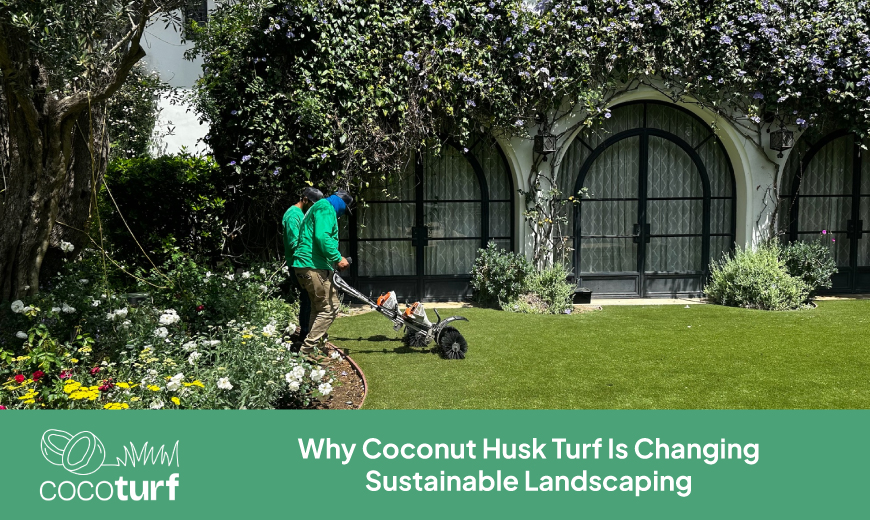
Reducing irrigation is only one part of creating a lower-input outdoor environment. Landscaping turf installation in Los Angeles can also address surface heat, maintenance, drainage, material composition, and long-term usability. Coconut husk systems offer an alternative to conventional infills that depend heavily on sand or crumb rubber.
A successful artificial grass landscape must perform in direct sunlight while maintaining a comfortable, natural-looking surface. Cocoturf combines premium turf made in the USA with Cocofill, a nature-inspired infill developed from coconut husk and natural cork. The complete system is designed to retain moisture and release cooling effects as temperatures rise.
Coconut Husk Infill Solves the Heat Problem Sand and Crumb Rubber Created
Conventional turf installations often use sand, crumb rubber, or combinations of synthetic infill materials. These products can add weight, support blades, and influence surface performance, but some also absorb and retain considerable heat under direct sunlight.
Coconut husk turf infill approaches temperature management differently. Its organic composition can retain moisture and support evaporative cooling. Site exposure, air temperature, shade, surrounding hardscape, turf color, and maintenance still affect the final surface temperature, so no infill eliminates heat in every condition.
Cocofill Blends Coconut Husk and Natural Cork Into One Organic Layer
Cocofill combines processed coconut husk and natural cork to create an organic infill layer within the turf system. The materials help support the turf blades while contributing to a softer, more natural surface underfoot.
The infill should be installed at the specified depth and distributed consistently across the landscape turf. Base preparation, drainage, turf selection, infill quantity, and grooming all influence performance. Coconut-based material alone cannot correct poor grading, inadequate drainage, or an unsuitable turf product.
Moisture Retention is What Lets an Organic Infill Cool the Surface
Coconut husk and cork contain cellular structures capable of holding moisture. As the surface warms, retained moisture can gradually evaporate and help reduce heat at the turf level. The effect is similar to the cooling process that occurs when moisture evaporates from natural soil and vegetation.
Cooling results vary with weather and property conditions. Periodic moisture may be required to support the process during extended dry periods. Depending on the location and selected system, Cocoturf surfaces are designed to remain more than 40 degrees Fahrenheit cooler than many traditional synthetic turf products.
Sustainable Landscaping Means Fewer Inputs, Not Only Less Water
Water conservation is an important reason to replace a conventional lawn, but sustainability should be evaluated more broadly. A landscape may also require fertilizers, pesticides, fuel-powered mowing, edging, reseeding, and repeated replacement of damaged areas.
Eco friendly artificial grass should reduce ongoing inputs while remaining durable enough to avoid premature replacement. Property owners should consider product origin, material composition, expected lifespan, maintenance requirements, drainage performance, heat management, and how the installation works with trees, planting beds, permeable areas, and existing irrigation.
Non-Toxic Certification Carries as Much Weight as the Sustainability Claim
Terms such as natural, green, and sustainable can be used broadly, so property owners should request documentation supporting environmental and material claims. Product data should address turf fibers, backing, infill, adhesives, fire performance, lead, heavy metals, and other components included in the system.
Cocoturf offers products described as plastic-, lead-, and heavy-metal-free, along with fire-rated turf options. Specifications can vary among products, so owners should confirm that the documentation corresponds to the exact system proposed for their property.
Where Coconut Husk Turf Fits Across an Artificial Grass Landscape
Coconut husk systems can be incorporated into front yards, backyards, pool surroundings, pet areas, playgrounds, commercial properties, and recreational spaces. The design should identify where turf provides practical value and where planting, shade, hardscape, or permeable materials remain the better choice.
High quality artificial grass should complement the complete landscape rather than cover every available surface. Proper landscaping turf installation in Los Angeles requires precision grading, custom drainage, secure edges, suitable infill, and careful transitions between turf and surrounding materials.
A fake grass landscape can appear artificial when every section uses the same blade height, color, and layout. Varying planting borders, contours, pathways, and usable zones helps the turf fit the architecture and surrounding outdoor environment.
Frequently Asked Questions
What is coconut husk turf infill?
Coconut husk infill is an organic material placed between artificial grass blades as part of the completed turf system. It can support the blades, contribute to a softer feel, and retain moisture for evaporative cooling. Specific formulations may combine coconut material with cork or other natural components.
Does coconut husk infill keep artificial grass cool in Los Angeles?
It can reduce surface heat compared with many conventional infill systems, but performance depends on sunlight, weather, shade, moisture, surrounding materials, and installation. No outdoor surface remains cool under every condition. Property owners should discuss expected performance and maintenance with the installer before choosing a system.
Is Cocofill completely maintenance-free?
No. Organic infill and artificial turf still require care. Maintenance can include removing debris, brushing fibers, monitoring infill distribution, checking drainage, cleaning used areas, and adding moisture when needed to support cooling. The recommended schedule depends on traffic, weather, pets, trees, and the specific installation.
Can coconut husk turf be used throughout a Los Angeles property?
It can work in many residential and commercial areas, including lawns, play spaces, pet areas, pool surroundings, and recreational zones. Each location should be evaluated for drainage, traffic, sun exposure, slope, and intended use. One turf product or base design may not be suitable for every part of a property.
How should I compare sustainable artificial turf systems?
Compare product composition, manufacturing location, documentation, cooling method, drainage design, expected lifespan, warranty, maintenance, and end-of-life considerations. Ask whether environmental claims apply to the turf, infill, backing, or complete system. A credible proposal should explain both the materials and the site-specific installation process.
Summary
Coconut husk and cork provide a nature-inspired alternative to conventional synthetic infills. A properly designed artificial grass landscape can reduce irrigation and recurring maintenance while addressing drainage, comfort, durability, and surface temperature. Landscaping turf installation in Los Angeles should combine documented materials with site-specific preparation so the environmental benefits extend beyond water savings.
Best Landscaping Turf Installation in Los Angeles
Transform your outdoor space into a beautiful place with top-quality artificial turf installation. This surface maintains temperatures with an average of up to 40 degrees cooler than traditional synthetic turf products. Count on long-term performance with Cocoturf that’s comprised of non-toxic, organic materials. If you want the best landscaping turf, contact us at (310) 957-1900.