
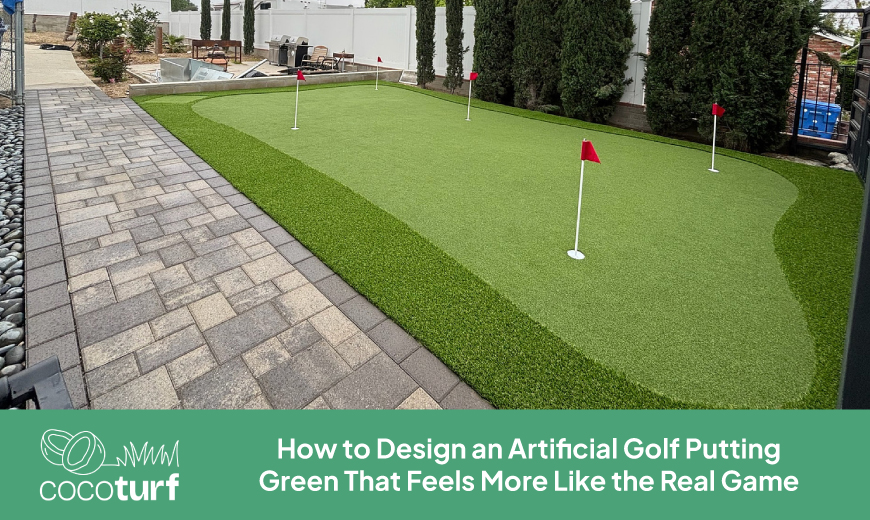
A realistic backyard green begins with the base, contours, drainage, and intended practice goals rather than the visible turf alone. Putting green installation in Los Angeles should consider available space, soil conditions, slope, desired green speed, player ability, and the types of shots the owner wants to practice.
Well-designed outdoor artificial putting greens should provide more than a flat surface with several cups. Changes in elevation, directional breaks, fringe zones, approach areas, and varied hole locations create a setting where golfers can work on distance control, alignment, reading greens, and short-game consistency.
Green Speed is Decided Long Before the Turf is Rolled Out
Putting speed depends on the complete system, including base compaction, surface preparation, turf selection, blade characteristics, infill, and final grooming. Choosing turf without defining the desired playing speed can produce a green that feels unnaturally slow or difficult to control.
The installer should discuss whether the owner wants a recreational surface or a faster practice green. High quality artificial grass designed for putting should provide consistent ball movement without creating an unrealistic surface that rewards only one stroke type.
Contours and Breaks Separate a Real Green from a Flat Putting Mat
A completely flat green allows golfers to practice basic alignment, but it offers limited preparation for actual course conditions. Subtle contours require players to judge pace, direction, and break while maintaining a controlled stroke.
Contours should be created in the prepared base rather than improvised after the turf arrives. Excessive slopes can make balls difficult to stop, while thoughtful elevation changes provide several practice lines without sacrificing usable putting area.
Fringe and Collar Turf Create the Transition Every Short Game Needs
Fringe and collar areas create a visual and functional transition between the putting surface and the surrounding landscape turf. Different blade heights can support bump-and-run shots, light chips, and putts from just beyond the green.
The transition should be planned with the overall fake grass landscape rather than added as an afterthought. Thoughtful shaping allows the green to complement nearby patios, pathways, planting beds, and recreational areas while expanding the variety of shots available.
Cup Count and Placement Shape How You Actually Practice
Cup placement determines the number of practice lines, distances, and breaks a golfer can experience. A compact green may need only two or three cups, while a larger design can support additional targets without becoming visually crowded.
Each location should provide a distinct practice challenge. Cups placed too close to edges, steep slopes, or one another limit usable approach angles. The installer should also preserve enough uninterrupted space for longer putts across the green.
Surface Temperature Decides How Long You Stay Out There
Synthetic turf can retain heat under direct sunlight, especially when surrounded by concrete, stone, walls, or limited shade. A green that becomes uncomfortable during the day may receive less use, regardless of how accurately it plays.
Cocoturf uses nature-inspired systems with natural organic cooling components. Coconut husk turf infill and specialized installation methods are designed to help reduce surface heat compared with many conventional synthetic products, depending on the site, weather, exposure, and selected system.
Los Angeles Site Conditions Dictate How the Base is Built
Soil type, drainage, slope, access, tree roots, irrigation, and existing hardscape affect the construction of every putting green. A hillside property may require more grading and stabilization, while a confined yard can limit excavation equipment and material delivery.
Putting green installation in Los Angeles should begin with an evaluation of the property rather than a standard base specification. Precision grading, compaction, drainage planning, and secure perimeter construction create the foundation for consistent ball roll and long-term performance.
Frequently Asked Questions
How much space does a backyard putting green need in Los Angeles?
A useful green can fit within a relatively compact yard, but more space allows for longer putts, additional contours, varied cup positions, and surrounding fringe. The design should respond to the property rather than forcing a standard shape into it. Access, drainage, setbacks, landscaping, and other outdoor features also affect the usable area.
Can artificial putting turf reproduce the speed of a golf course?
Artificial turf can be designed to provide a selected range of playing speeds, but no surface perfectly reproduces every natural green. Course conditions change with grass type, moisture, mowing, weather, and maintenance. A good installation prioritizes consistent roll and a speed appropriate for the owner’s practice goals.
Are outdoor artificial putting greens suitable for sloped Los Angeles yards?
Yes, but the existing slope must be evaluated carefully. Some elevation can be incorporated into realistic breaks, while excessive grade may require excavation, retaining work, drainage improvements, or stabilization. The finished contours should create playable challenges without allowing balls to roll uncontrollably away from intended cup locations.
What maintenance does an artificial putting green require?
Maintenance may include removing leaves and debris, brushing the surface, inspecting seams and edges, monitoring infill, clearing drainage areas, and addressing weeds around the perimeter. Heavy use can also affect specific putting lines. Following the installer’s maintenance recommendations helps preserve consistent ball roll and surface appearance.
Is ecofriendly artificial grass available for Los Angeles putting greens?
Material compositions and environmental claims vary considerably among manufacturers. Property owners should ask where the products are made, which materials are used, how the system manages heat and drainage, and what documentation supports environmental claims. Reduced watering is one benefit, but the entire product and installation system should be evaluated.
Summary
Realistic outdoor artificial putting greens combine appropriate speed, controlled contours, varied cup locations, fringe areas, temperature planning, and site-specific base preparation. The best design supports several practice situations while fitting naturally within the surrounding property. Putting green installation in Los Angeles should begin with the desired playing experience and build every layer around that goal.
Best Putting Green Installation in Los Angeles
Transform your outdoor space into a putting green with top-quality artificial turf installation. This surface sports an average of up to 40 degrees cooler than traditional synthetic turf products. Count on long-term performance with Cocoturf that’s comprised of non-toxic, organic materials. If you want the best putting green artificial turf for golf lovers, contact us at (310) 957-1900.