
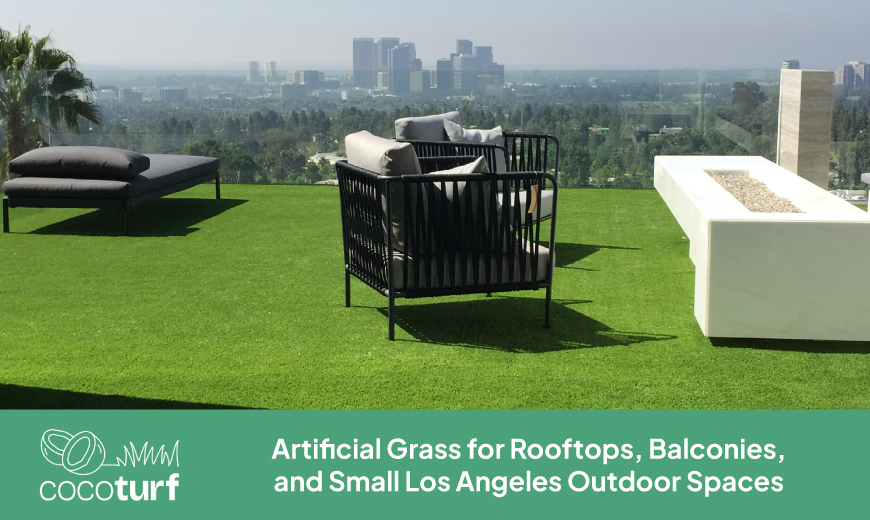
A rooftop, balcony, or compact patio can become a comfortable outdoor living space with artificial grass, but installation over an elevated surface requires a different approach than installation over soil. Weight, drainage, waterproofing, wind, sun exposure, and access all need to be considered before the turf goes down.
Well-planned artificial grass for rooftops should work with the existing structure rather than interfere with it. The installation needs to preserve drainage routes, protect the roof membrane, and use materials suited to the building and how the space will be used.
Balcony artificial grass requires similar planning on a smaller scale. The finished surface should feel soft, polished, and natural without trapping water, blocking drains, or adding unnecessary weight.
Why Rooftops and Balconies Need a Different Turf System
A ground-level turf installation can typically be excavated, graded, and prepared with a compacted base. Rooftops and balconies already have structural surfaces and waterproofing systems that need to remain intact.
A lightweight artificial turf system can use specialized layers that support drainage, cushioning, and airflow while protecting the surface underneath. Depending on the property, a floating system may also eliminate the need to drill into the roof or permanently adhere turf to it.
The entire assembly matters. Turf fibers may be the only part you see, but the system underneath has a major effect on drainage, stability, comfort, and long-term performance.
Weight, Load Limits, and Building Approval Before Installation
Rooftop planning should begin with what the structure can safely support.
The total load can involve much more than turf. Furniture, planters, outdoor kitchens, shade structures, people, drainage components, and other landscape elements all contribute to the finished space.
Professional rooftop turf installation in Los Angeles should take the complete design into account before materials are selected. Condominium and multifamily properties may also require HOA, property management, or building approval before installation begins.
Understanding these requirements early makes it easier to design an attractive green space without unnecessarily loading or altering the existing structure.
Rooftop Turf Drainage That Protects the Roof Membrane
Water needs a clear path through and underneath the turf to the building’s existing drainage system. Blocking that route can allow water to collect where it should not.
Effective rooftop turf drainage keeps scuppers, drains, channels, and other water-management components accessible. Permeable turf backing and an appropriate drainage layer can help water travel through the system rather than becoming trapped underneath it.
The waterproof membrane also needs protection throughout installation and future maintenance.
Artificial grass for rooftops should never be approached as outdoor carpeting that can simply be rolled across a roof deck. What happens beneath the visible surface is just as important as how the finished grass looks.
Managing Heat and Reflected Sun on Elevated Surfaces
Los Angeles rooftops and balconies can receive intense direct sunlight as well as heat reflected from glass, walls, concrete, and nearby hardscape. Material selection becomes particularly important when people, children, or pets will regularly use the space.
Organic infill materials such as coconut husk and cork can retain moisture and support evaporative cooling, helping create a more comfortable surface than conventional systems that use heat-retaining infills.
Shade, airflow, umbrellas, planters, and surrounding materials can also influence comfort.
For balcony artificial grass exposed to strong afternoon sun, combining the turf system with smart shade and landscape design can make the area more inviting throughout the day.
Securing Turf Against Wind Without Penetrating the Roof
Elevated outdoor spaces can experience stronger wind than protected yards at ground level. Turf therefore needs to remain secure without compromising the waterproof roof assembly.
Depending on the property and installation requirements, floating systems can provide an alternative to drilling through the surface or relying on permanent adhesives.
Edges, seams, transitions, perimeter conditions, and the shape of the space all influence how the system should be secured. The goal is a stable installation that feels integrated with the architecture while keeping the underlying roof protected.
Design Ideas for Small Patios, Courtyards, and Side Yards
Limited square footage can actually make good landscape design more noticeable. A relatively small amount of green can soften concrete, tile, decking, and surrounding walls while giving different areas a clear purpose.
Artificial grass for small yards can be used to create:
- A compact outdoor lounge
- A children’s play area
- A pet-friendly corner
- Green strips between pavers
- A yoga or exercise space
- A dining area bordered by planters
- A pathway through a narrow side yard
- A small putting or recreation area
Condo patio turf can also transform an otherwise hard, plain surface into an extension of the interior living space. Clean edges, realistic texture, subtle transitions, and appropriately scaled furnishings help keep a small area sophisticated rather than crowded.
Balcony Artificial Grass for Compact Outdoor Living
A balcony may offer only a few dozen square feet, so every material has a noticeable visual impact.
Turf can soften concrete and hard architectural lines while providing a more comfortable surface underfoot. It does not necessarily need to cover the entire balcony. A defined green section paired with lounge seating, containers, or a dining area can create visual zones without overwhelming the space.
Drain locations and access points should remain functional and accessible. When future access to the underlying balcony surface may be necessary, a removable or floating configuration can offer additional flexibility.
Maintenance Tips for Rooftop and Balcony Turf
Artificial turf eliminates mowing and traditional lawn irrigation, but periodic care keeps an elevated installation looking clean and performing properly.
Routine maintenance can involve:
- Removing leaves and airborne debris
- Brushing fibers in high-traffic areas
- Rinsing the surface when appropriate
- Cleaning spills promptly
- Checking seams and perimeter edges
- Keeping drains and drainage channels clear
- Monitoring areas beneath furniture and planters
- Maintaining infill at the recommended level
Balcony artificial grass can collect dust, pollen, leaves, and other debris even several stories above ground. Because these spaces are compact, regular light maintenance is usually easier than waiting for debris to accumulate around drainage points.
Creating More Usable Space with Artificial Grass for Rooftops
In Los Angeles, where private outdoor space can be limited, even a modest roof deck can become valuable living space. The right turf system can introduce greenery and softness without mowing, mud, or the irrigation demands of natural grass.
A rooftop can function as a lounge, entertaining area, pet space, children’s play zone, or quiet retreat. Natural-looking fibers, organic materials, thoughtful drainage, cooling performance, and careful installation can help the space complement an upscale property rather than feel like an artificial add-on.
Artificial grass for rooftops is most successful when the entire environment is considered together. Structure, waterproofing, drainage, sunlight, wind, furniture, traffic patterns, and landscape elements should all contribute to a cohesive final design.
Frequently Asked Questions
Can artificial grass be installed directly on a Los Angeles rooftop?
Many rooftop surfaces can accommodate turf, but the structure, waterproofing, drainage, weight limitations, and existing surface should be evaluated first. The installation method needs to be appropriate for the individual property.
Will artificial turf interfere with rooftop drainage?
A properly designed system should preserve existing drainage routes. Drains, scuppers, and channels need to remain accessible while the turf and underlayment allow water to move toward them.
Is artificial grass suitable for a small condo balcony?
Yes. Turf can soften a compact outdoor space and create a comfortable surface for seating, relaxing, or entertaining. The design should account for drainage, weight, wind exposure, and access to the underlying balcony.
How can rooftop turf be kept cooler in Los Angeles?
Turf construction, infill, shade, airflow, moisture, and surrounding materials can all influence surface temperature. Organic infills made from materials such as coconut husk and cork can support evaporative cooling when moisture is present.
Does rooftop artificial grass require much maintenance?
Maintenance is relatively light but still important. Removing debris, brushing fibers, addressing spills, checking edges, and keeping drainage areas clear can help maintain appearance and performance.
Summary
Rooftops, balconies, courtyards, and other compact Los Angeles outdoor areas require more than simply choosing attractive turf. Weight, waterproofing, wind exposure, drainage, heat, and building requirements all influence the right installation system. A carefully designed rooftop or balcony surface can add greenery and usable outdoor space while protecting the structure underneath. For small properties in particular, the combination of realistic turf, organic materials, effective drainage, and a lightweight installation can create a polished outdoor environment without the upkeep and water demands of natural grass.
Looking for Artificial Grass for Your Rooftop or Balcony? Cocoturf has You Covered
Make more of your rooftop, balcony, patio, or compact yard with turf designed for comfort, beauty, and the way you actually use your outdoor space with long-lasting artificial grass by Cocoturf. Create a cooler, softer surface with a natural look and organic materials that feel right at home in an upscale Los Angeles setting. For a consultation and quote, contact us at (310) 957-1900.